

Wake up. And just see.
LASIK, Customised LASIK and flap-free TransPRK on the Schwind AMARIS platform, in Mumbai. Start with a free screening, and an honest answer on whether it suits your eyes.
- Free screening, with a written suitability report
- Single-use flap head — opened for you, discarded after
- Flap-free TransPRK available when a flap is not right
This is what your eyes see right now
Set the slider to your own spectacle power, then drag the line across. That blur is the world you wake up to every morning.
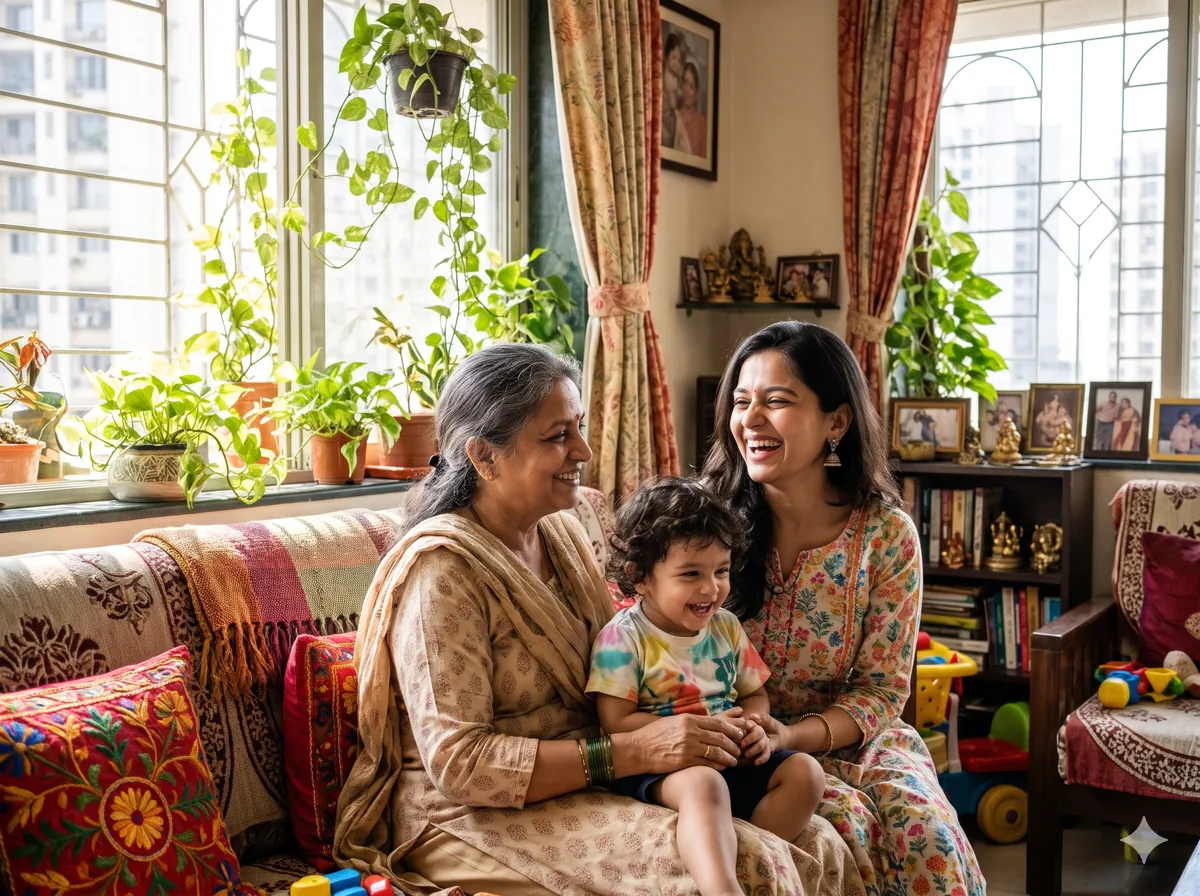
A simulation to show what blur feels like — not a prediction. Your achievable result depends on your own measurements and is decided at the screening.
Book your free screening
Takes 30 seconds. Our counsellor calls you to fix a slot.
Request received
Our LASIK counsellor will call you shortly to confirm your screening slot. If it is urgent, call us now.
Which procedure is likely right for you?
Most centres have one answer because they own one machine. We run LASIK, Customised LASIK and flap-free TransPRK — so the honest answer depends on your eye, not our equipment.
Has your spectacle power stayed roughly the same for the last year?
Do you play contact sports, or is your work physically rough?
Has any doctor mentioned a thin cornea, or told you LASIK may not suit you?
Three procedures, one honest recommendation
LASIK
The established flap-based procedure. A thin flap is created, the laser reshapes the cornea underneath, the flap is replaced. Most people are seeing clearly the next morning.
Customised LASIK
The same procedure, but the laser profile is built from your own corneal measurements rather than your spectacle number alone. Useful for higher powers, astigmatism and irregular corneas.
TransPRK
Surface treatment with no flap, no blade and no suction on the eye. Recovery takes a few days longer, but with no flap there is no flap to dislodge. Often better for thinner corneas and contact-sport players.
How LASIK is actually done
Three steps, roughly ten minutes for both eyes. You are awake throughout, under anaesthetic drops.

How TransPRK is done
Nothing cuts the eye and nothing touches it. The laser does the entire job from the surface, in one continuous step.

Because no flap is ever created, there is no flap that can wrinkle or dislodge later — which is why this is often the better answer for thin corneas, boxers, cricketers and anyone whose work involves knocks to the face.
What your eye is actually treated with
Two pieces of equipment decide most of the outcome: the laser that reshapes the cornea, and the instrument that creates the flap.
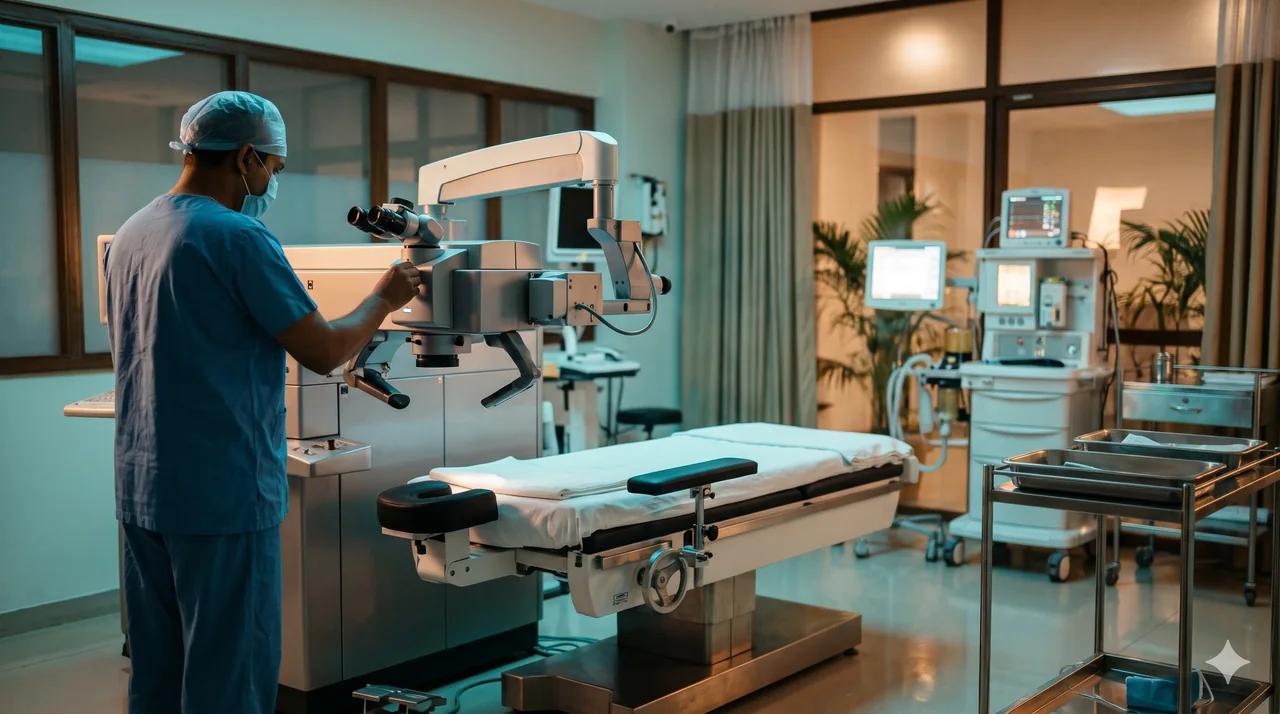
Schwind AMARIS
A German-built excimer laser platform used for LASIK, Customised LASIK and TransPRK alike. It fires at 500 pulses a second, so for most prescriptions the laser itself is done in well under a minute.
- 5D eye tracking. It follows your eye side to side, up and down, towards and away from the laser, and — the part that matters most for cylinder — the way the eye rolls around its own axis when you lie down. Basic trackers only follow the first two.
- Sharper astigmatism correction. Because that roll is measured and corrected live, the cylinder is placed on the axis it was measured on, not the one your eye drifted to.
- Less time open, more predictable result. A shorter treatment gives the cornea less time to dry out, and drying is one of the things that pushes a result towards under- or over-correction.
- Treats sphere, cylinder and higher-order irregularities
- Runs the flap-free TransPRK profile as well as conventional LASIK
- Tissue-saving ablation profiles — relevant when corneal thickness is tight
Moria SBK microkeratome
SBK stands for Sub-Bowman’s Keratomileusis — a design intended to produce a thinner, more uniform flap than older microkeratome designs.
- Single-use head. The part that contacts your eye is new, sterile, and discarded after you — the cross-contamination route simply does not exist
- Thin, planar flap leaves more corneal tissue untouched underneath
- More residual tissue means a wider safety margin, and keeps a future touch-up possible
Why people choose us for this
Open any one of them.
The screening costs you nothing
A full refractive workup — vision, refraction, corneal mapping, corneal thickness, dry-eye check and a dilated retinal examination. You leave with a written suitability report, whether or not you book anything.
A German excimer platform
500 pulses a second, so the laser is usually done in under a minute. Its 5D tracker follows your eye in five directions — including the roll around its own axis that happens when you lie down — which is what keeps an astigmatism correction on the right axis. Same laser runs conventional LASIK, Customised LASIK and flap-free TransPRK.
The part that touches your eye is new
Our Moria SBK microkeratome uses a disposable head. It is opened for you, used once, and discarded — so the cross-contamination route simply does not exist. The SBK design also leaves a thinner, more uniform flap.
TransPRK, when a flap is not the right idea
If your cornea is on the thinner side, or your work or sport puts your eyes at risk of a knock, there is a surface treatment with no flap, no blade and no suction ring. Same laser, different approach.
Not everyone should have LASIK
Thin corneas, an unstable prescription, severe dry eye, keratoconus — these are real reasons to decline, and we do decline. You will hear it at the screening, with the measurements in front of you, not after you have paid.
Everything happens at Malad West
Screening, surgery and every follow-up are at the Orlem hospital on Marve Road — the site that holds the QAI accreditation and the nursing-home registration. You are not screened in one place and operated in another.
What varies between LASIK setups
These are the questions worth asking at any hospital you consider, including ours. Here are our answers, in writing.
| What to ask | Commonly found | At Sahu Eye Hospital |
|---|---|---|
| Which excimer laser? | Varies — often an older-generation platform | Schwind AMARIS — 500 Hz, 5D tracking |
| How is the flap created? | Microkeratome with a reusable head | Moria SBK — single-use head, one patient only |
| Flap thickness | Thicker, conventional flap | Thin flap by SBK design — more tissue left untouched |
| Treatment profile | One standard profile for everyone | Standard or Customised, chosen after measurement |
| Flap-free option available? | Frequently not offered | Yes — TransPRK, no flap, no blade, no suction |
| Who decides which procedure? | Often whatever the centre is equipped for | Decided after your screening — and we say no when you are not suitable |
| Screening cost | Usually chargeable | Free — including the suitability report |
About an hour. No cost. No pressure.
You leave knowing whether LASIK is safe for your eyes, which procedure fits, and exactly what it would cost. Nothing is booked on the day.
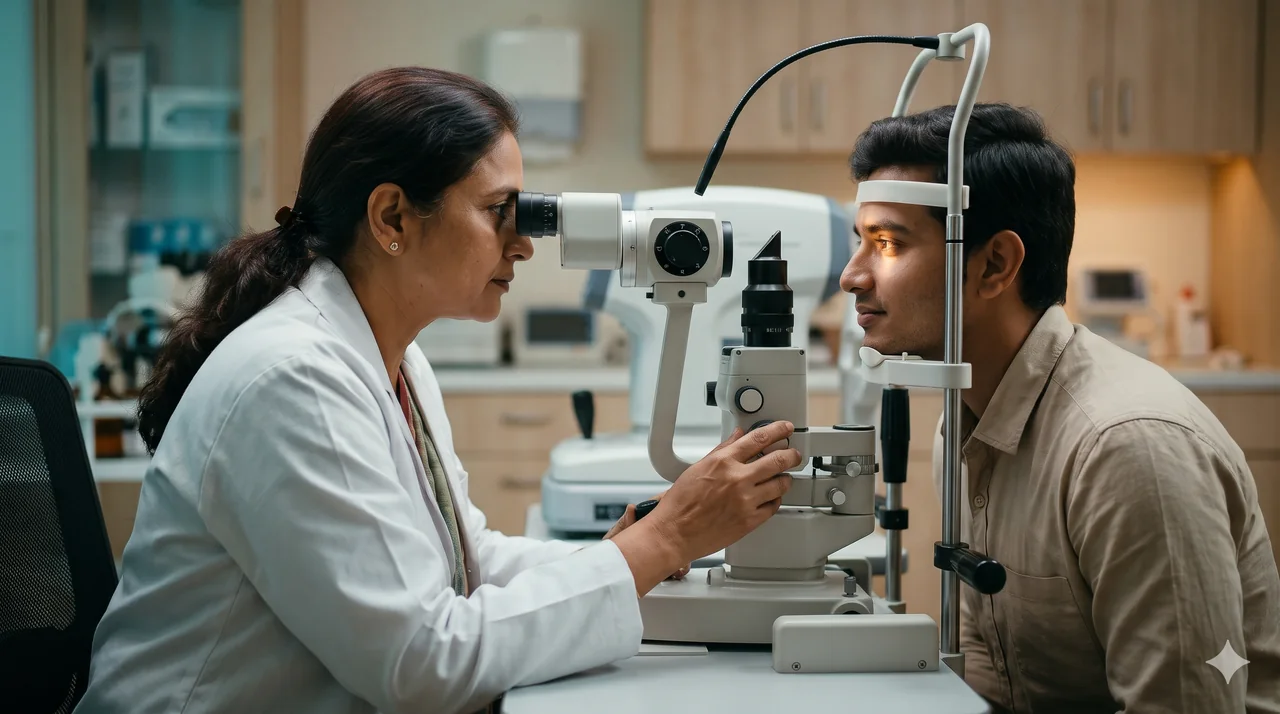
Measurements
Vision and refraction check, corneal mapping and corneal thickness — the numbers that actually decide suitability.
Examination
A dilated check of the retina and tear film. Dry eyes and retinal findings change the plan, so they are checked before, not after.
Your answer
The surgeon tells you whether you are suitable, which procedure fits your cornea, and what it costs. If you are not suitable, you are told that too.
Please bring your current spectacles. If you wear contact lenses, stop them a few days before — our team will tell you exactly how long when they call.

Dr. Chinmaya Sahu
Refractive & Vitreo-retinal Surgeon. Over two decades in practice — and the surgeon who both screens you and operates on you. The same person, start to finish.
- Trained at Sankara Nethralaya, and a trainer at L V Prasad Eye Institute
- Performs LASIK, Customised LASIK and TransPRK on the Schwind AMARIS at Malad West
- Also a vitreo-retinal surgeon — so the retina check in your screening is done by a retina specialist, not referred out
What Mumbai says about us
“Hospital is very good, and I had my LASIK surgery done by Dr. Chinmaya Sahu. Before the surgery, he explained all the pros and cons in detail and patiently cleared all my doubts. The entire procedure was handled very professionally.”
“I visited Sahu Eye Hospital to enquire about LASIK, and I had a wonderful experience from start to finish. Dr. Chinmaya Sahu explained all the available options in detail and recommended Customized LASIK, which was the best.”
“I had my LASIK procedure done at Sahu Eye Hospital, and it was a completely painless experience. Dr. Madhvi ma’am guided me throughout the entire process and made me feel very comfortable and confident.”
“Excellent LASIK surgery experience. Dr. Sahu and staff were very professional. Now my vision is perfect without glasses. Thank you Dr. Chinmaya.”
“Had my Lasik operation here. Doctor Chinmaya was very helpful and explained all the aspects of the surgery in detail. The surgery was very smooth and I was out in a jiffy.”
“My sister and I got our Lasik surgery done recently from here and I can assure you that you can trust Dr Chinmay with ur eyes closed.”
“I was here for LASIK and I got it done really quick and smooth. Everyone here are really kind and helpful as well. And it’s quick recovery as well. Surgery was bladeless.”
“In our family, we have done cataract, Lasik etc for several members. All under Dr Chinmaya Sahu. Blind faith on Dr Sahu!”
“I had a great experience during my lasik surgery journey. From the initial consultation to the post-surgery follow-ups, they were extremely helpful, patient, and understanding.”
What people ask before booking
Is the screening really free? What is the catch?
It is free and there is no catch. The screening exists because a meaningful number of people who want LASIK should not have it — thin corneas, unstable power, dry eye, retinal findings. We would rather find that out before you pay anything. If you are not suitable, you will be told so, and you owe nothing.
Will it hurt?
The procedure is done under anaesthetic drops, not an injection. Most patients describe pressure rather than pain. With LASIK, discomfort usually settles within hours. With TransPRK, expect two to three days of irritation while the surface heals — that is the trade-off for having no flap.
How soon can I get back to work?
After LASIK, most people are back at a desk the next day. After TransPRK, allow roughly a week. Your surgeon will give you a definite answer once the procedure is decided.
What does it cost?
The price depends on which procedure suits your eyes — LASIK, Customised LASIK and TransPRK are not priced the same. You get the exact figure for your eyes at the screening, before you commit to anything.
Can it be covered under insurance?
Often, yes — if the number is high. Most insurers will not pay for a small power, because at that level they treat it as cosmetic, but a high power is usually considered. Nobody can confirm it before your eyes are measured, so check with your own insurer or TPA after the consultation, once you have the procedure and the exact power in writing.
Am I too old, or is my power too high?
Age usually needs to be 18 or above with a power that has been stable for about a year. Very high powers, very thin corneas or certain corneal shapes may rule out LASIK — though TransPRK or a lens-based option may still work. The measurements decide, not a rule of thumb.
Can I bring someone with me?
Please do. Your eyes will be dilated during the screening, so your vision will be blurry for a few hours afterwards. Do not plan to drive yourself home.
Stop wondering whether it is possible.
One free screening answers it. Book a slot at our Malad West hospital and find out exactly where your eyes stand.
Malad West
1st Floor, Almar Arcade, above Punjab National Bank, near Orlem Market, Marve Road, Malad West, Mumbai 400064
Mon–Sat, 10:00 am – 8:00 pm